
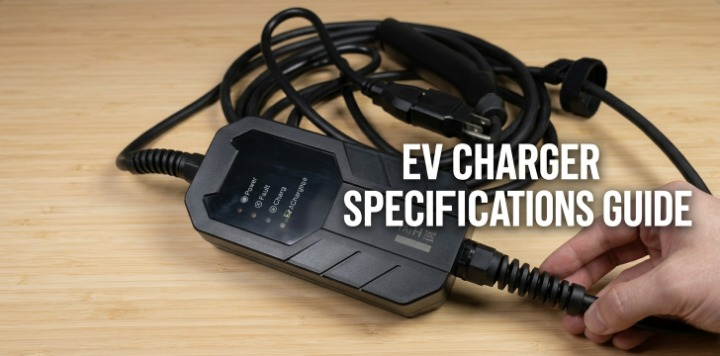
Reading an EV charger spec sheet sounds straightforward until you actually open one.
What starts as a simple product comparison suddenly turns into pages of numbers, abbreviations, electrical terms, and technical tables. Power ratings, input voltage, connector types, protection levels, installation requirements. After a few minutes, many buyers end up focusing on a handful of familiar numbers and ignoring everything else.
That usually leads to one of two outcomes.
Either people choose the charger with the biggest specifications assuming bigger means better, or they skip details that later turn out to matter during installation and daily use.
A spec sheet is not meant to make the decision more complicated. It is supposed to help answer a practical question: will this charger actually fit the way you plan to use it?
Once you know what to look for, reading one becomes much easier.
Start With the EV Charger Specifications That Affect Everyday Use
When people first open a spec sheet, charging power usually gets all the attention.
Power matters, but it is rarely the only number worth looking at.
Some of the most useful information on a charger specification sheet relates to whether the charger fits the installation environment and expected usage.
Pay close attention to:
• Rated charging output
• Input voltage requirements
• Connector compatibility
• Mounting configuration
• Operating temperature range
• Installation location suitability
For example, a charger with higher output capacity may sound attractive, but if the available electrical supply cannot support it, that extra capacity may never be fully used.
Installation details matter too.
Wall mounted equipment can create different planning considerations compared with installations that require additional infrastructure or outdoor placement.
This is one reason commercial and residential buyers often approach spec sheets differently. One may prioritize convenience while the other may focus more heavily on utilization and scalability.
Look Beyond Charging Speed When Reading an EV Charger Spec Sheet
Charging speed tends to dominate purchasing conversations.
That makes sense because faster charging feels easy to compare.
But many experienced buyers spend just as much time reviewing information that affects long term ownership.
A useful spec sheet often reveals details such as:
• Environmental protection levels
• Cable management options
• Maintenance access
• Operating efficiency
• Installation flexibility
• Long term service considerations
These details become more noticeable after installation than during purchasing.
For example, outdoor charging projects may care more about environmental exposure and physical durability than maximum charging speed.
That is one reason products built for different use cases can look similar at first while offering very different ownership experiences later.
Manufacturers such as CEED Electric provide multiple charging solutions including Wall/Pole Mount EV Charger products and Portable EV Charger options because installation conditions and usage expectations are rarely identical from one project to another.
Use the EV Charger Spec Sheet to Compare Fit Instead of Compare Numbers
One of the easiest mistakes when reviewing specifications is turning the process into a search for the highest value in every category.
A better approach is comparing specifications against actual requirements.
Before making a decision, ask questions such as:
• Where will the charger be installed
• Who will use it
• How frequently will charging occur
• Is future expansion expected
• Does portability matter
• What operating conditions are realistic
These questions often narrow the selection process faster than comparing technical tables.
The strongest specification sheet is not always the one with the longest list of features.
It is usually the one that gives enough information to understand whether the charger fits the intended application.
Once the focus shifts from maximum specifications to practical requirements, decisions become much easier to make.
Conclusion
An EV charger spec sheet should make decision making easier, not more confusing.
Understanding a few core specifications and connecting them to real world use cases can prevent unnecessary upgrades, installation surprises, and performance expectations that do not match reality.
Whether reviewing a Portable EV Charger for flexibility or evaluating a Wall/Pole Mount EV Charger for a permanent installation, the goal is not to find the biggest numbers on the page.
The goal is to find the charger that works best for the way it will actually be used.
