
Every power distribution project comes with unique constraints. Site space, local environmental conditions, maintenance resources and overall budget all shape equipment selection. Engineers and project managers widely deploy air‑insulated switchgear, gas‑insulated switchgear, compact substations and ring main units as mainstream medium‑voltage hardware. Learning their core differences helps engineers and project managers make well‑informed decisions.
Air‑Insulated Switchgear: Proven Open‑Air Distribution
Air‑insulated switchgear uses atmospheric air as its insulating medium. The metal‑enclosed cabinet houses circuit breakers, disconnectors and protection components. Its internal structure can be inspected without complex testing tools.
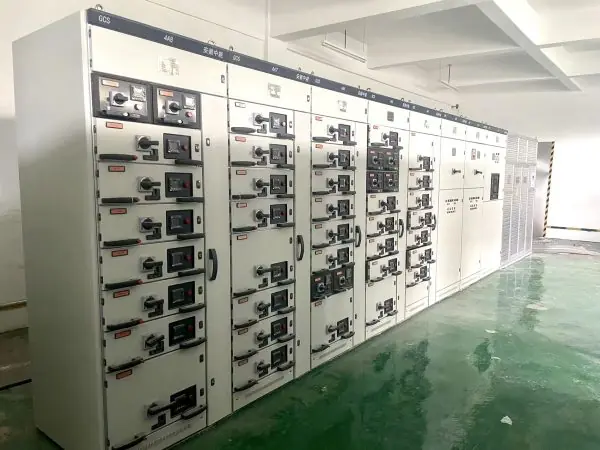
This type of equipment performs reliably under standard indoor conditions. It requires no gas filling, pressure monitoring or regular gas‑related maintenance. Installation and component replacement remain straightforward for maintenance teams. The main drawback is larger cabinet dimensions, which demands more floor space inside the substation room.
It suits industrial parks, urban substations, commercial buildings and most conventional new‑energy supporting projects where sufficient installation space is available.
Gas‑Insulated Switchgear: Space‑Saving For Restricted Locations
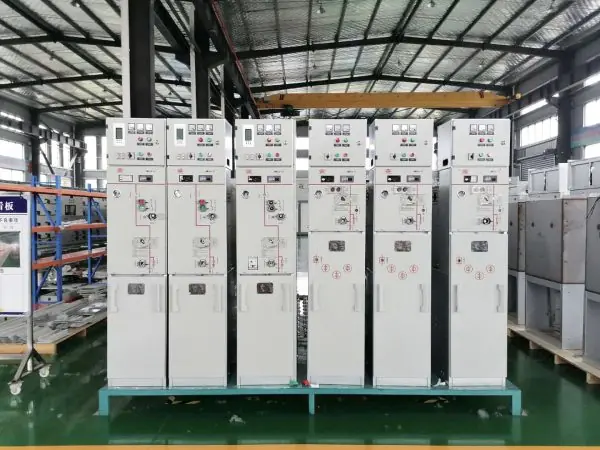
Gas‑insulated switchgear relies on insulating gas to isolate live conductors. Furthermore, it houses all core components within metal enclosures, and its compact internal construction greatly cuts the overall footprint.
Besides, its fully‑sealed design shields internal circuits from dust, moisture and chemical pollution. As a result, the equipment holds steady performance even at harsh sites. Even so, operators must carry out periodic checks for gas pressure and potential leakage. On‑site repairs also demand specialised technical skills.
Therefore, it fits city‑centre substations, high‑density buildings and locations with very limited floor area perfectly.
Compact Substation: All‑In‑One Integrated Power Solution
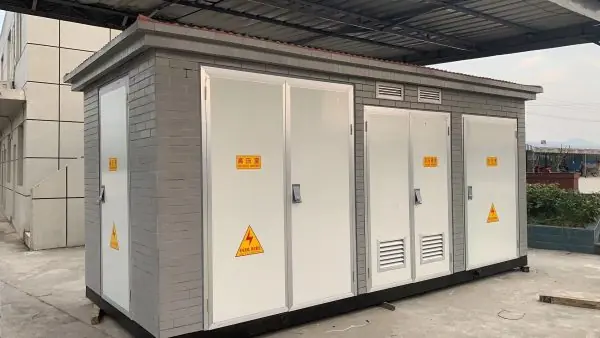
A compact substation combines high‑voltage switch sections, transformers and low‑voltage distribution units within one sealed enclosure. Most assembly and factory tests are completed before delivery.
After transportation to site, workers only complete cable connections to put the whole unit into service. It eliminates extensive on‑site assembly work. The integrated design saves construction time and reduces civil‑work requirements.
Compact substations are commonly deployed for residential communities, industrial zones, solar‑wind power plants and temporary construction power supply.
Ring Main Units: Reliable Equipment For Distribution Networks
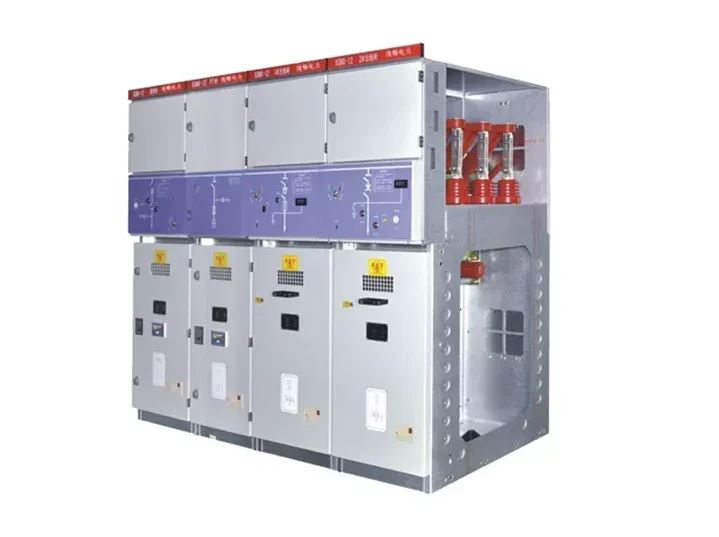
Ring main units deliver compact medium‑voltage performance for ring‑network power supply. They provide straightforward switching and fault‑isolation functions for branch power lines.
Ring main units feature solid mechanical structures and reliable dust‑proof, moisture‑proof properties, so operators spend very little time on daily maintenance. They boost power‑supply continuity across urban cable networks. If one feeder breaks down, the ring network reroutes power and prevents widespread blackouts.
Engineers deploy these units within urban cable grids, residential districts and small‑scale commercial distribution points.
Conclusion
There is no universal‑fit medium‑voltage distribution device. Air‑insulated, gas‑insulated switchgear, compact substations and ring main units each carry distinct strengths and limitations. By evaluating site space, environmental conditions and maintenance capacity, project teams can match proper equipment to achieve safe, stable and cost‑effective power‑distribution operation.
