

As electric vehicles become more popular, the need for efficient and fast charging solutions is more important than ever.
Today, there are mainly two challenges when it comes to the ability of fast charging Electric Vehicles (EVs). First, the availability of charging stations on the road. Mostly, EV’s are being charged at home or work, but whenever outside those areas, it is much harder to find a fast-charging station. Portable chargers are your best bet at this point!

The second challenge is the charging speed. A typical 22 kW AC charger provides enough charge in 120 minutes to provide an additional 200 km of vehicle range. To reduce the 200 km range charge time to only 16 minutes, a 150 kW DC charging station is required. At this level of power, and to avoid overheating, an effective and improved thermal management is needed as the temperature can increase to more than 270°C during a 10-minute fast charge, according to a report from the U.S. Department of Energy.
In general, air cooling is the preferred solution. Its advantages include simplicity and low cost, but it cannot handle the heat generated by high-power EV chargers. Water-based liquid cooling systems can dissipate heat up to 10 times more efficiently, and other liquids can further improve cooling efficiency. Therefore, liquid cooling is receiving more and more attention as the most efficient solution available.
Why Is Liquid Cooling Necessary?

The more quickly you charge an EV, the greater the need for thermal regulation. Higher power helps you charge the vehicle much faster, but it generates quite a lot of heat. As electricity flows from the charging station through the charging cables and into the vehicle battery cell, internal resistances to the higher currents are responsible for generating these high amounts of heat. This facilitates a need for liquid cooling methods for the battery cell and pack in order to avoid damage to the equipment and ensure the safety of the EV owner.
How does liquid cooling maintain a stable temperature EV charger?
The temperature can be optimized by the device’s water loop system. Mineral oils and water-glycol are among the fluids found in them. These coolants circulate through the cables, cooling them and regulating the temperature at the connections.
The optimizing liquid cooling fluid includes fluid connectors that are well-designed. This can be applied to cooling chargers.
When charging occurred at full power. The cooling quickly dissipates the heat. The coolant can flow back and forth from the cooling unit to the cable and connector.
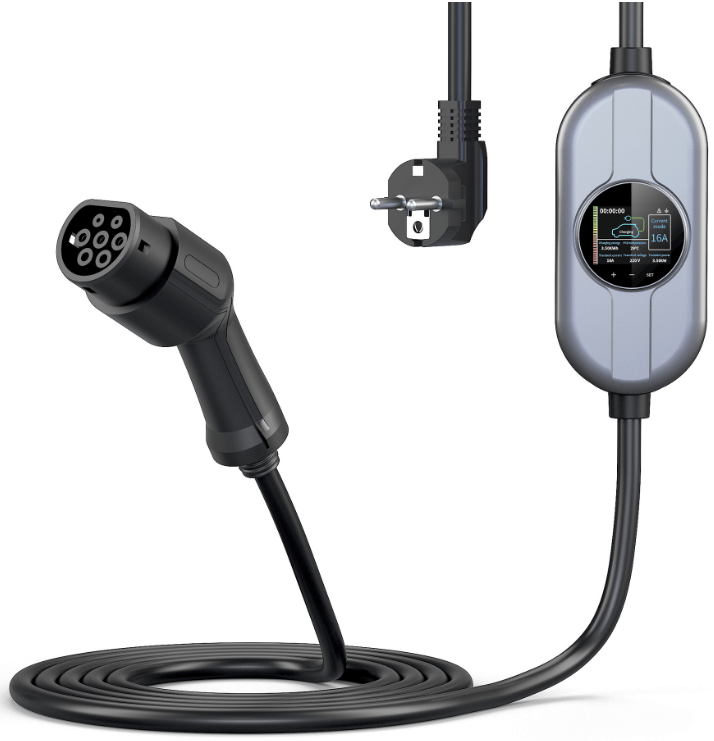
Benefits of liquid cooling systems over other cooling systems
– Energy-saving
– Works quietly
– Does not need open space to function.
– It is safe to use.
– Use with a longer lifespan
Quick connect couplings a key component in liquid cooling systems
In a field where uptime and reliability are the keys to success, utilizing high-quality components is highly important. Just as overheating, leakage in an electronic system is a common worry in case of an accident. Using CEED quick connect couplings, which is a key part in a liquid cooling system, designed for long-term reliability with high flow and low-pressure drop, minimizes these risks.

