
For many electric vehicle owners, charging has traditionally been associated with one place: home.
A vehicle returns to the garage at night, connects to a wall-mounted charger, and is ready for the next day. This routine works well for homeowners with dedicated parking spaces, but it does not represent the experience of every EV driver.
Apartment residents, long-distance travelers, outdoor enthusiasts, and fleet operators often face a different challenge: what happens when charging is needed away from a fixed installation?
As electric vehicle adoption continues to grow, charging flexibility has become just as important as charging speed. This is where portable EV charging solutions are helping expand the possibilities beyond traditional home charging.
When Home Charging Is No Longer Enough
Home charging remains one of the most convenient ways to power an electric vehicle. However, many real-world situations require additional options.
Drivers may travel to locations without dedicated charging stations, stay in temporary accommodations, or need backup charging during unexpected situations.

For example, an EV owner on a road trip may find that public charging infrastructure is unavailable or inconvenient. Similarly, users living in apartments may not have access to private charging spaces.
These challenges reveal an important limitation of traditional charging systems: they depend heavily on fixed locations.
As EV ownership expands beyond early adopters with ideal charging conditions, the need for more adaptable charging methods is becoming increasingly clear.
Why EV Charging Needs More Flexibility
The growth of electric vehicles is changing how people think about energy access.
Unlike traditional fuel vehicles that can quickly refuel at established stations, EVs rely on charging infrastructure that is still developing in many regions.
This creates several practical challenges:
- Limited access to charging points in certain locations
- Different charging requirements between vehicle owners
- The need for emergency or backup charging options
- Increasing demand from mobile and outdoor users
A flexible charging approach helps reduce dependence on a single charging environment.
Portable EV chargers provide users with an additional charging option that can support daily driving, travel, and situations where fixed charging equipment is unavailable.
Rather than replacing home chargers or public charging networks, portable solutions work as a complementary part of a broader EV charging ecosystem.
The Technology Behind Portable EV Chargers
Modern portable EV chargers combine safety features, compact design, and charging performance to meet the needs of mobile users.
Unlike early charging equipment that was difficult to transport, today’s portable solutions are designed for easier storage and everyday use.
Key technologies include:
- Intelligent charging control
- Overcurrent and overheating protection
- Durable cable and connector designs
- Compact structures for transportation
These features allow users to charge their vehicles more confidently in different environments.
A well-designed Portable EV Charger must balance several factors, including charging efficiency, safety protection, portability, and compatibility with different usage scenarios.
For this reason, manufacturers are focusing not only on charging speed but also on improving user convenience and reliability.
Why Portable EV Chargers Are Becoming More Important
As electric mobility continues to develop, charging is becoming less about a single location and more about accessibility.
Portable charging products provide EV owners with greater independence by allowing them to bring charging capability wherever it is needed.
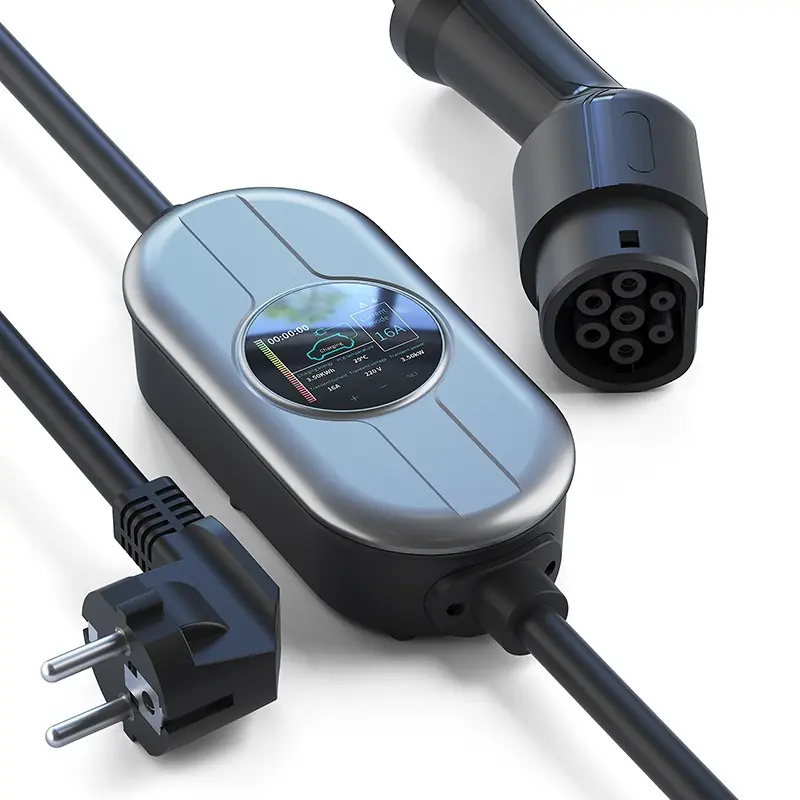
Products such as CEED Portable EV Fast Safe Charger Holder Grey Mobile Charger are designed to support users who need a flexible charging option beyond traditional home installations.
By combining portable design with safety-focused charging technology, these solutions help address practical challenges faced by modern EV users.
Portable EV chargers are also becoming valuable for businesses, rental services, and fleet operators that require adaptable charging solutions without installing permanent infrastructure everywhere.
The future of EV charging will likely include a combination of home chargers, public charging networks, and portable solutions working together to create a more complete charging experience.
Conclusion
The expansion of electric vehicles requires more than simply increasing the number of charging stations. It also requires solutions that adapt to different lifestyles, locations, and usage requirements.
Portable EV chargers provide an important layer of flexibility by allowing drivers to charge beyond traditional home environments.
As EV adoption continues to grow, portable charging technology will play a valuable role in creating a more convenient and accessible electric mobility ecosystem.
