
A manufacturing plant suddenly stops operating.
Robotic arms freeze in place, conveyor systems shut down, and monitoring systems begin issuing alarms. Although the interruption lasts only a few minutes, the consequences are far more significant. Production schedules are disrupted, materials are wasted, and restarting the equipment takes much longer than expected.
For many industrial operators, this is not an unusual scenario. As factories become more automated and production processes become increasingly interconnected, maintaining a stable electrical distribution system has become more important than ever.
Today, medium voltage distribution networks serve as the backbone of modern industrial infrastructure, ensuring that power reaches critical equipment safely, efficiently, and continuously.
When a Few Seconds of Downtime Becomes a Major Problem
Industrial facilities consume enormous amounts of electricity. Motors, pumps, compressors, automated machinery, and digital control systems all rely on a constant power supply.
Unlike traditional office buildings, industrial environments often operate around the clock. Any interruption can affect not only production output but also employee safety, equipment performance, and overall operational efficiency.
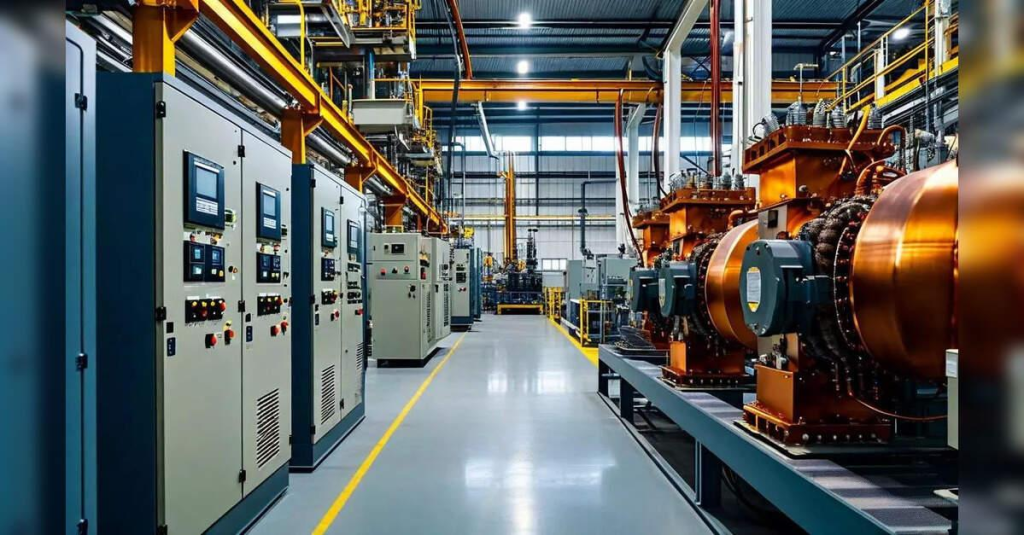
As industrial processes become increasingly sophisticated, electrical loads are becoming more dynamic and unpredictable. Facilities are also adding renewable energy systems, energy storage equipment, electric vehicle charging stations, and advanced automation technologies, placing additional pressure on existing infrastructure.
Under these conditions, even a minor fault can quickly spread through the network if adequate protection measures are not in place.
Why Traditional Distribution Networks Face New Challenges
Conventional power distribution systems were not designed to support today’s industrial requirements.
Growing energy demand is one challenge, but complexity is another. Facilities now depend on interconnected systems that require higher levels of visibility, flexibility, and fault tolerance.
Several factors contribute to increased operational risk:
- Rising electrical loads
- Aging infrastructure
- More sensitive electronic equipment
- Higher expectations for uninterrupted operation
- Increasing maintenance requirements
In addition, power quality issues such as voltage fluctuations, overloads, and short circuits can damage equipment and shorten its service life.
As a result, engineers are focusing more attention on strengthening every layer of the electrical distribution system.
How Medium Voltage Distribution Improves System Reliability
Medium voltage distribution plays an essential role in transmitting electricity efficiently throughout large industrial facilities.
Compared with low-voltage systems, medium voltage networks are better suited for carrying higher power levels over longer distances while reducing transmission losses.
More importantly, modern distribution systems provide several advantages:
- Faster fault detection and isolation
- Improved system redundancy
- Greater operational flexibility
- Better power quality management
- Increased equipment protection
These capabilities help prevent local faults from affecting an entire facility.
At the same time, intelligent monitoring technologies allow operators to collect real-time performance data, identify abnormalities, and schedule maintenance more effectively.
The result is an electrical infrastructure that is more resilient, more efficient, and better prepared for future expansion.
Why Ring Main Units Have Become Increasingly Important
As industrial networks grow larger and more complex, Ring Main Units (RMUs) are playing a more significant role in maintaining power continuity.
Unlike traditional radial distribution systems, ring networks create multiple pathways through which electricity can flow. If a fault occurs in one section, the affected area can be isolated while power continues to reach other parts of the facility.
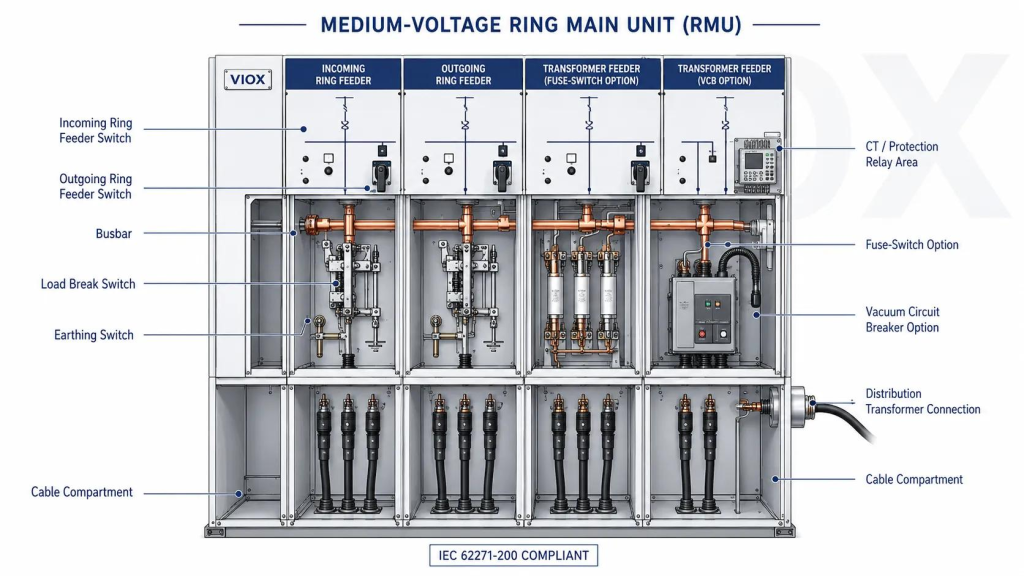
This design improves both reliability and operational flexibility while reducing the risk of widespread outages.
Ring Main Units also offer compact construction, simplified maintenance procedures, and integrated protection mechanisms. These advantages make them particularly suitable for manufacturing plants, mining operations, renewable energy facilities, airports, and large commercial complexes.
Companies such as CEED provide RMU solutions designed to support the growing demands of modern medium voltage distribution networks while helping operators maintain safe and reliable power delivery.
Conclusion
Industrial facilities depend on continuous and stable electricity to maintain productivity, protect equipment, and ensure worker safety.
As electrical demand continues to rise, a well-designed electrical distribution system is no longer simply an operational requirement; it has become a strategic investment in long-term reliability.
Medium voltage distribution systems, together with advanced Ring Main Unit technology, help industrial operators build more flexible, efficient, and resilient power networks capable of supporting the next generation of industrial development.
